I’m on a conference call with a client. She’s fuming. Every few minutes, she lets an awkward silence hang in the air just long enough to make me squirm.
The theme is familiar. Our performance campaigns aren’t performing. CPLs go up, then down, then up again. Leads follow the same trend. We are taking one step forward and two steps back. Around in circles we go.
Guesswork had become our entire strategy.
She snaps a question at me: “Neil, how are you going to fix the lead problem before next month?” My response is a classic stall: “Let’s change the creative up a bit and run some tests.” Her voice goes cold. “We have no more creative. This is it.”
We were fired two months later.
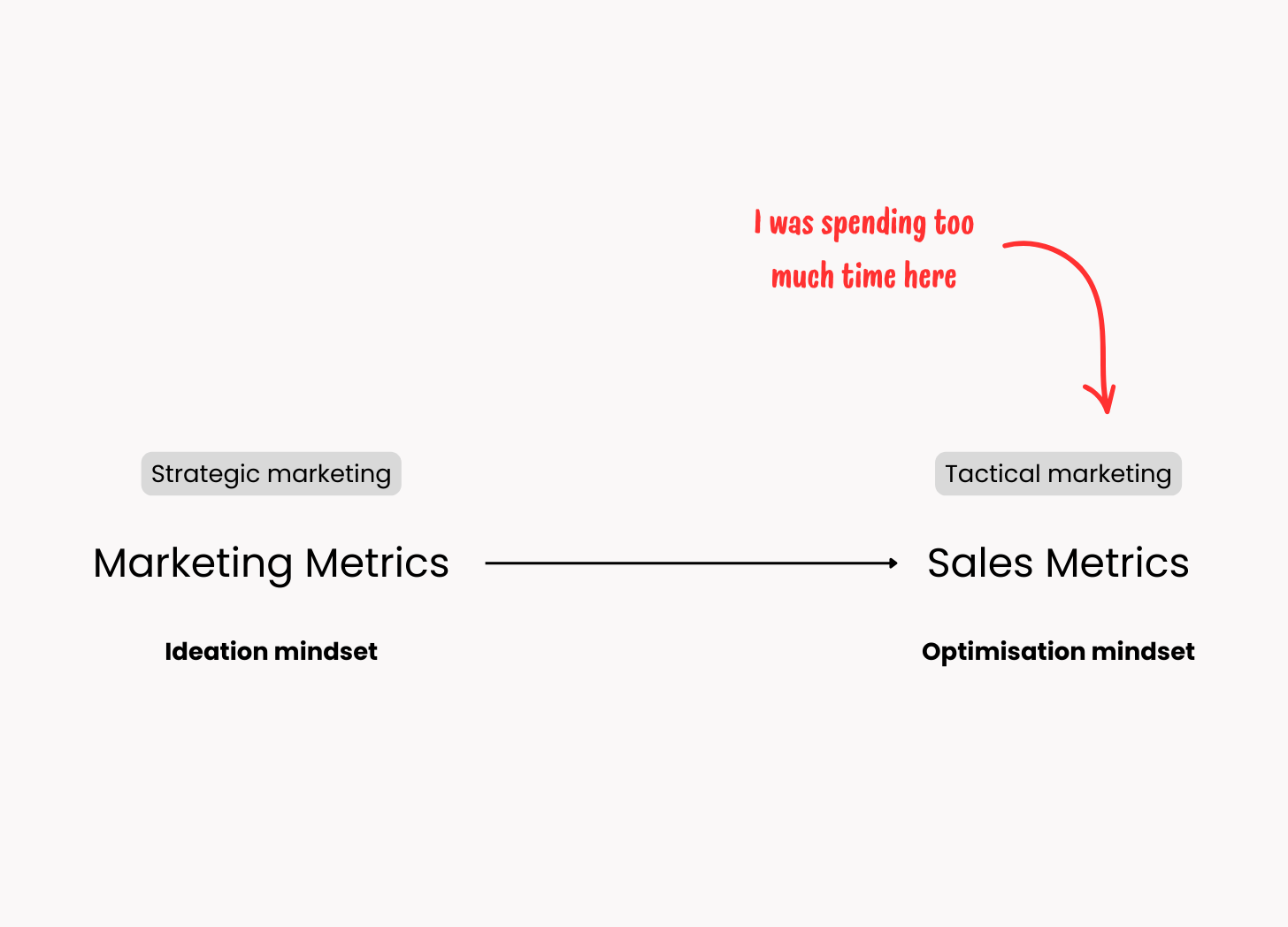
One year later, in late 2018, I was working with and studying how the world’s biggest brands approach marketing. That’s when the five-second moment hit me. We were optimising platform metrics for sales outcomes while the actual brand was dying. No one knew who they were. No one cared. We were obsessed with “how many leads” but never asked “are we building a brand people actually want?”
That obsession created a tunnel vision of click optimisation. No product positioning. No brand framework. Just the endless optimisation of ads for a brand nobody remembered.
Today, when clients ask me “How will you fix our lead problem?”, I have a different answer.
Before we fix leads, we need to fix the quality of the execution, the craft, the strategy… Across brand, performance, sales and customer. That requires moving out of the Distraction Zone of CTRs and CPCs and into the Investment Zone of creative and media principles.
Build the culture and the right guardrails for marketers to excel.
To do this, you have to address the “hard way” upfront. You must build a brand people know before they even enter the category. If you don’t, you’ll spend your entire career optimising performance campaigns for two groups: the people who already know you and would have bought anyway, and the people who don’t know you and have no reason to care.
Both approaches will result in an obscene amount of media wastage.